
The Great American Truck Stop: From Chaotic Hunt to Strategic Advantage
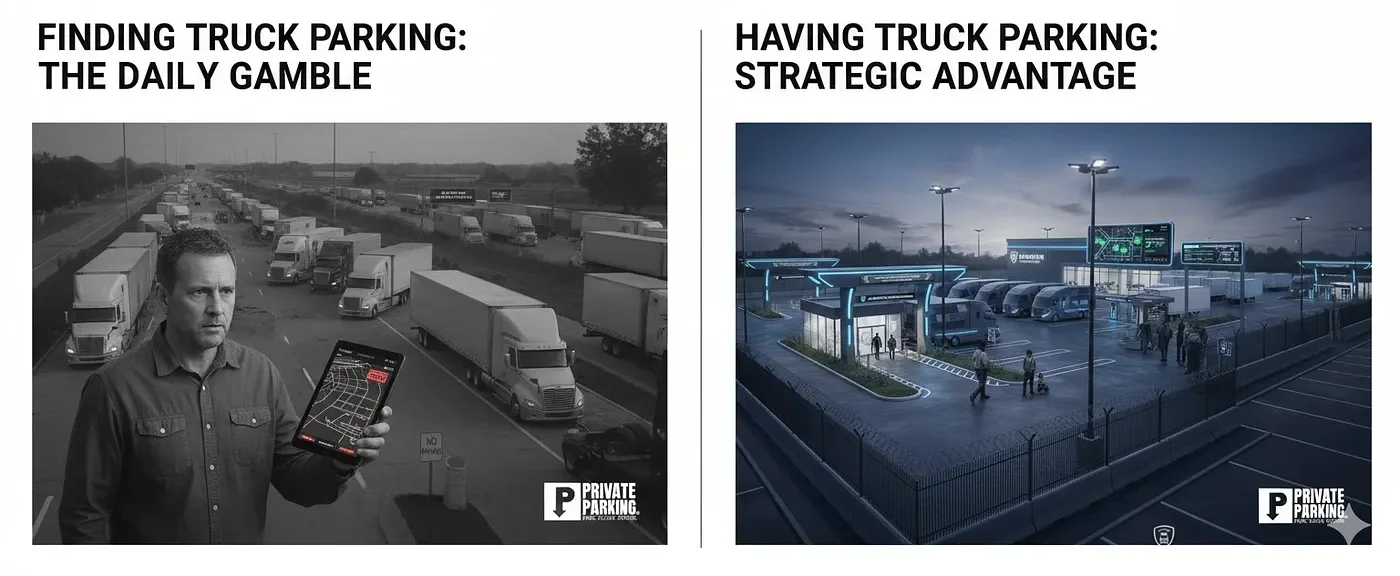
For decades, the nightly ritual of a long-haul truck driver across America has been a frantic, often desperate, search. As the sun dips below the horizon, the looming threat of HOS (Hours of Service) violations compels drivers to scavenge for one of the precious few remaining parking spots. This isn’t just an inconvenience; it’s a systemic problem, one that costs the industry billions and poses significant safety risks.
In 2026, a clear distinction is emerging: the difference between finding truck parking and having truck parking. This isn’t semantics; it’s a fundamental shift that separates reactive chaos from planned efficiency, profoundly impacting fleet performance and the very fabric of the supply chain.
The Chaos of “Finding”: A Daily Gamble
Imagine a critical surgery where the operating room isn’t booked, and the surgeon must race against the clock to find an available space in a crowded hospital. This analogy, while extreme, mirrors the daily reality for countless truck drivers.
The Economic Toll:
• Wasted HOS: Drivers spend an average of 56 minutes per day searching for parking, according to industry reports. This isn’t productive driving time; it’s lost capacity, leading to missed delivery windows and reduced earning potential for both drivers and carriers.
• Fuel Consumption: Idling while searching, or driving extra miles off-route in a desperate bid for a spot, burns fuel unnecessarily, contributing to operational costs and emissions.
• Maintenance & Wear: Aggressive maneuvers in tight, poorly designed lots, or even roadside parking in unsecured areas, increase the risk of minor accidents, tire damage, and even cargo theft.
• Financial Penalties: HOS violations can lead to hefty fines for both drivers and carriers, not to mention points on a driver’s CSA (Compliance, Safety, Accountability) score, impacting insurance rates.
The Human Cost:
• Driver Stress & Fatigue: The constant pressure to find parking is a significant contributor to driver stress and burnout. This emotional toll can lead to fatigue, increasing the risk of accidents and contributing to the industry’s pervasive driver shortage.
• Safety Risks: Parking in unauthorized or unsecured locations along exit ramps or industrial areas exposes drivers and cargo to increased risk of theft, vandalism, and personal harm.
• Reduced Quality of Life: The inability to consistently find safe, comfortable parking with amenities (restrooms, showers) degrades the quality of life for drivers, making the profession less attractive.
The Power of “Having”: Strategic Advantage and Predictability
The concept of “having” truck parking signifies a proactive approach — a strategic integration of secure, available parking into trip planning. This shift is driven by technology, infrastructure investment, and a growing recognition of parking as a critical supply chain asset.
How Planned Parking Transforms Performance:
• Optimized HOS Utilization: When parking is pre-booked or assured through network partnerships, drivers can maximize their driving time, knowing exactly where they will rest. This leads to more efficient routes and on-time deliveries.
• Enhanced Security: Dedicated, secure parking facilities with advanced surveillance, access control, and on-site personnel drastically reduce the risk of cargo theft and damage. This translates to lower insurance premiums and greater peace of mind.
• Improved Driver Retention: Providing drivers with access to safe, comfortable, and predictable parking locations with amenities is a powerful tool for recruitment and retention. It signals that a fleet values its drivers’ well-being.
• Predictable Operations: Integrating parking into dispatch and routing systems creates a more predictable and resilient supply chain. Fleets can commit to tighter delivery windows with greater confidence.
• Data-Driven Decisions: Advanced parking networks provide data on availability, usage patterns, and security incidents, allowing fleets to make informed decisions about their parking strategies and identify critical gaps.
The Future is Reserved: Technology as the Enabler
The transition from “finding” to “having” is largely facilitated by technological advancements:
• Real-time Availability Apps: Platforms that show real-time parking availability and allow for advanced reservations are becoming indispensable.
• Integrated Telematics: The ability to push parking reservations directly to a driver’s ELD (Electronic Logging Device) or navigation system streamlines the process.
• Smart Parking Lots: Facilities equipped with sensors, LPR (License Plate Recognition), and automated gates enhance security and provide seamless entry/exit.
Final thoughts
The chaotic daily scramble for truck parking has long been an accepted, if lamented, reality of the trucking industry. However, as the demands on the supply chain intensify and the imperative for efficiency and driver welfare grows, the industry is moving towards a more strategic model. “Having” truck parking isn’t just about convenience; it’s about building resilience, improving safety, and unlocking the full potential of a modern logistics operation. For fleets looking to thrive in an increasingly complex environment, secure, planned parking is no longer a luxury — it’s a fundamental necessity.
