
What Fleets Should Look for in Secure Truck Parking Locations A practical guide to evaluating parking sites based on safety, access, location, and operational reliability.
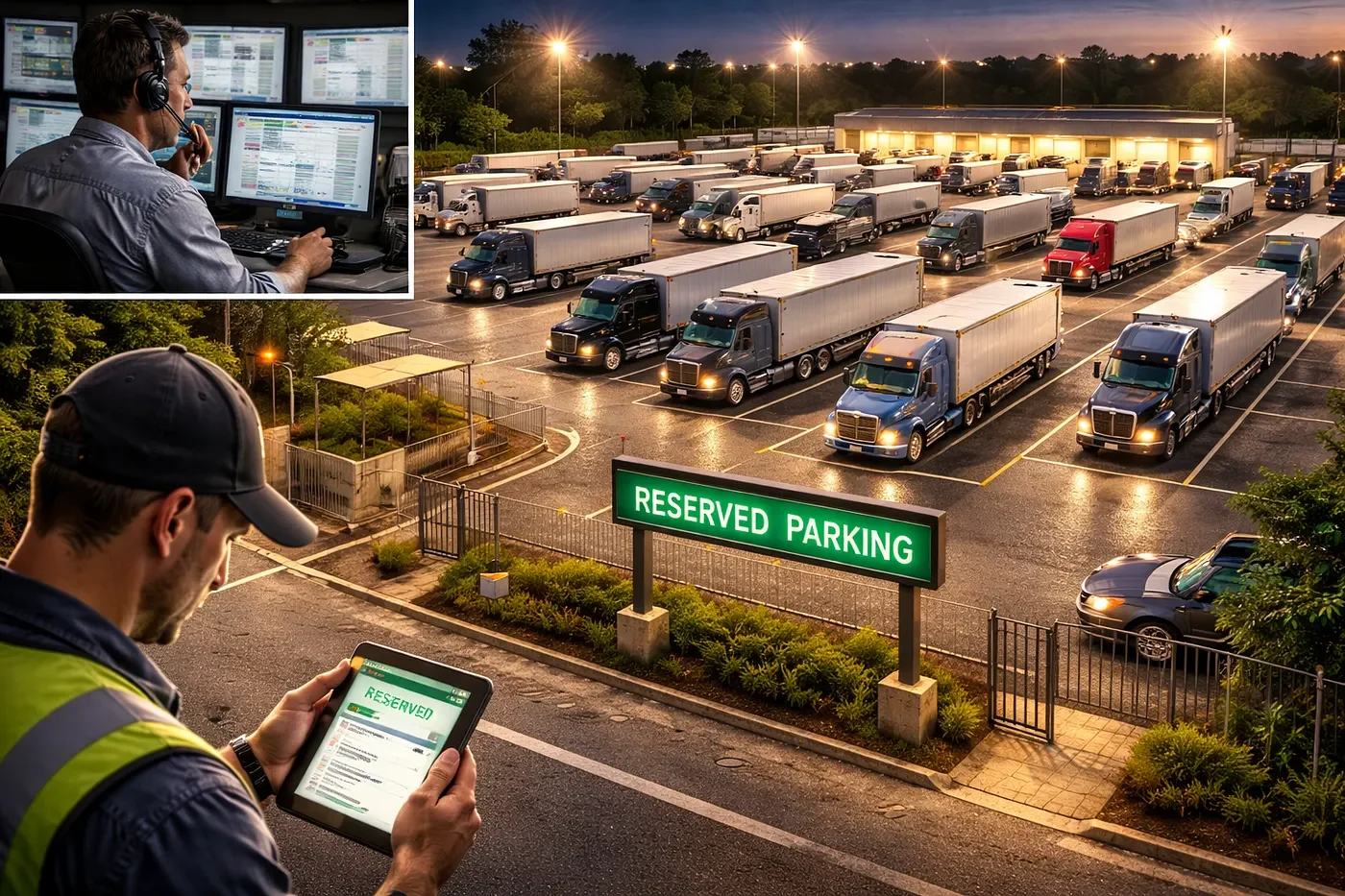
In 2026, the logistics landscape has shifted from simply finding a place to park to finding a strategic asset. With cargo theft becoming more sophisticated and driver retention tied directly to on-the-road safety, the “any port in a storm” mentality is no longer viable for modern fleets.
Choosing a parking site is an exercise in risk management. Here is a practical guide for fleet managers and operators on what to look for in a secure truck parking location.
1. Multi-Tiered Security Infrastructure
Physical presence remains the foundation of security. A high-quality site doesn’t just have a gate; it has a perimeter strategy.
• Perimeter Hardening: Look for 8-foot fencing with anti-climb features (like barbed or razor wire) and concrete barriers at vulnerable points.
• Active Surveillance: 24/7 high-definition CCTV is standard, but top-tier sites now use AI-driven video analytics that can distinguish between a stray animal and a person tampering with a seal.
• The “Lighting Gradient”: Uniform, high-output LED lighting is essential. Avoid lots with “dead zones” or flickering bulbs. In 2026, many sites utilize motion-activated floodlights that alert on-site staff to movement in sensitive areas.
2. Advanced Access Control
The most secure sites treat their lot like a data center.
• Biometric or RFID Entry: Keypads are prone to code-sharing. Look for sites utilizing RFID tags, mobile app-based digital keys, or biometric scanners.
• License Plate Recognition (LPR): A secure lot should automatically log every plate and trailer number entering and exiting. This digital paper trail is invaluable for insurance claims and theft investigations.
• On-Site Personnel: While automation is great, the presence of a “boots on the ground” security guard provides a level of deterrence and rapid response that technology cannot match.
3. Operational Reliability & Layout
A site can be “secure” from theft but “unsafe” for the equipment.
• Maneuverability: Wide drive lanes and “pull-through” spots are critical. Tight turns lead to “lot rash” — minor collisions that cause significant downtime and repair costs.
• Surface Integrity: Avoid gravel lots that can wash out or hide debris. Well-paved, graded asphalt with professional drainage protects tires and prevents trailers from sinking during long stays.
• Real-Time Availability: In 2026, fleets should prioritize sites that integrate with telematics. Knowing a spot is actually available via an API or app prevents drivers from “burning” their Hours of Service (HOS) searching for a space.
4. Location and Logistics Integration
The “perfect” lot is only perfect if it makes sense for your route.
• Proximity to “The Last Mile”: Choose sites near major freight hubs or industrial corridors to minimize “empty miles” between the parking spot and the delivery point.
• Emergency Services Access: Evaluate how quickly local police or fire departments can reach the site. High-crime neighborhoods might offer cheaper rates, but the “theft tax” on your insurance will quickly outpace those savings.
5. Driver Welfare: The “Safety” Beyond Security
Security isn’t just about the cargo; it’s about the person behind the wheel.
• Amenities: Secure parking should include clean, well-lit restrooms, showers, and climate-controlled lounges. A rested driver is a safe driver.
• Shore Power (Idle Reduction): To comply with tightening environmental regulations, look for sites offering electrical hookups. This allows drivers to maintain cabin climate without idling the engine, saving fuel and reducing wear.
Final Thoughts
When evaluating a site, don’t just look at the daily rate. Weigh the cost of the parking against the potential cost of a $250,000 cargo loss, a $10,000 trailer repair, or the loss of a top-tier driver who feels unsafe. In 2026, secure parking is an investment in your fleet’s resilience.
